
Tozo’s Vizo AR Glasses V1 offer an enjoyable way of experiencing the big screen in a small form

The Tozo Vivo AR Glasses V1 are a lightweight, entertainment‑focused pair of AR glasses that deliver a sweet, generally bright and crisp virtual display and genuinely enjoyable portable viewing. However, they fall a bit short of the ambition that their form factor suggests. They’re excellent for watching films or playing controller‑based games on the go, yet their strict reliance on a wired connection and the absence of any onboard camera or interactive features limit them to being a simple output device rather than a true mixed‑reality product.
Tozo’s Vivo AR Glasses V1 present themselves as a straightforward way to enjoy a large virtual screen without the bulk of a headset. They don’t run apps or track your surroundings, and they don’t attempt to blend digital elements into the real world (which is sort of what I had imagined) and instead, they act as a bright, portable display for devices like iPads or USB-C powered Android or Apple phones. In practice, this simplicity makes them outrageously easy to use and surprisingly convenient, but it also means they occupy a pretty niche area that frankly, I don’t think I care about.

The display is the highlight — which is good, because as I’ve said, there’s not much else to write about. The glasses project a huge virtual screen with crisp 1080p resolution and enough brightness to remain visible in most (but not all) settings. Colours are vivid, text is sharp, and the image feels stable and comfortable to look at for extended periods even despite the quirks of my own vision (strong astigmatism in one eye). Watching films or streaming a series feels natural, and games that rely on a controller rather than touch input work well enough. The sense of immersion is pleasant without being overwhelming, and the glasses strike a good balance between spectacle and comfort. For travel, late‑night viewing or simply relaxing without disturbing others, the display quality is more than good enough.
Audio performance complements the screen nicely and is better than I expected. The built‑in speakers sit just above the ears and produce clear, balanced sound that feels surprisingly spacious for such a small device. It’s enjoyable to watch content without needing earbuds, and the stereo separation adds a sense of depth that pairs well with the large virtual display. Sound leakage is noticeable, so in public spaces you may prefer headphones, but in private environments the integrated audio feels natural and convenient.

Comfort is generally good. The glasses are lightweight and well‑balanced, and the adjustable myopia correction is a thoughtful inclusion that makes them accessible to a wider range of users. I found that the fit was comfortable for sessions of an hour or two, though the arms can feel a little tight around the temples over longer periods. The cable is a bigger issue: because the glasses rely entirely on a wired USB‑C connection for both power and video, you’re always tethered to your device. For seated viewing this is fine, but it limits how casually you can wear them and makes the experience feel less futuristic than the form factor implies.
Usability is about as simple as it gets and should be credited. Plug in the cable, adjust the focus dials, and the glasses mirror your device’s screen without any further ado. Rotating your phone rotates the display, and switching between 2D and 3D modes is handled with a quick button press. There’s no setup process, no calibration, and no software to install and learn. This simplicity is refreshing, but it also underscores the limitations of the glasses: without a camera, sensors or onboard processing, the glasses can’t support hands‑free interaction, spatial apps or any kind of augmented overlay. They are, quite literally, a screen you wear on your face.
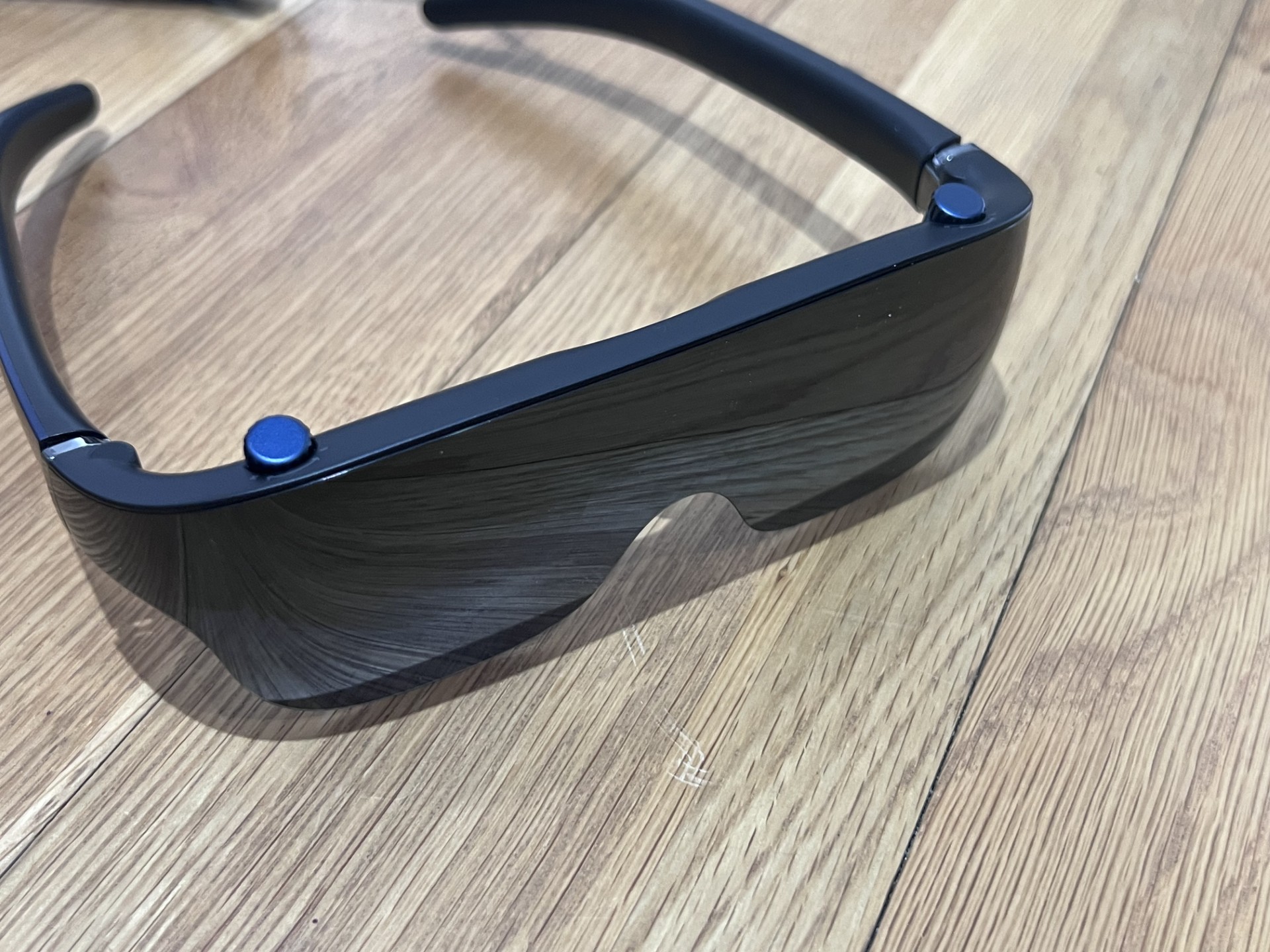
Because it’s so simple connectivity is broad — which helps offset those limitations. The glasses work with smartphones, laptops, handheld consoles and PCs as long as they support USB‑C DisplayPort output or an appropriate adapter. This makes the Vizo glasses a flexible companion for travel or commuting, and I found it particularly enjoyable to pair them with my phone as the setup was quick and simple. The ability to use them with multiple devices is one of their strongest qualities, and I found myself plugging them into all sorts of devices to see what worked.
Where the Vizo glasses fall short is in ambition. The form factor suggests a step toward mixed reality, yet the feature set is strictly limited to passive viewing. The lack of a camera means no AR overlays, no environmental awareness and no interactive elements. The permanent wired connection feels old‑fashioned, especially when so many modern devices emphasise wireless convenience. These constraints don’t ruin the experience — the glasses do what they set out to do — but they do make the product feel more like a clever display accessory than a glimpse of the future.

Despite these shortcomings, the Tozo Vivo AR Glasses V1 succeed at delivering a bright, comfortable and genuinely enjoyable viewing experience. They’re ideal for flights, trains, hotel rooms or simply watching a film without disturbing others (as long as you also have headphones). They feel practical rather than experimental, and that grounded approach makes them easy to recommend to anyone who wants a portable cinema they can slip into a bag. They won’t replace your TV or monitor, and they aren’t trying to. Instead, they offer a flexible, lightweight way to enjoy content wherever you happen to be.
Ultimately, the Tozo Vivo AR Glasses V1 are a thoughtfully designed pair of AR glasses that excel at one specific task: providing a large, crisp virtual screen in a compact form factor. They fall short of the broader ambitions associated with augmented reality, but as a personal entertainment device they’re effective, enjoyable and surprisingly versatile. For travellers, commuters and casual viewers, they’re a delightful companion; for anyone seeking deeper AR functionality, they’re a stepping stone rather than a destination.
You can buy the Tozo Vizo V1 glasses on the official Tozo website.
