

Hurt Me Plenty: The Ultimate Guide to First-Person Shooters 2003-2010 can be described in two words: bloody massive.
Published by Bitmap Books and written by Stuart Maine, Hurt Me Plenty is the follow-up to I’m Too Young to Die. Where that book covered the first steps and early childhood of first-person shooters, Hurt Me Plenty tackles the teenage years. This was a period where FPS games made mistakes, experimented with new ideas, had some incredible highs and slowly started figuring out exactly what they wanted to be.
We live in a time where the question of ownership is becoming more important. Digital store fronts continue to grow, disk drives are becoming less common and the shops that sold physical games are disappearing. Preservation is something I find myself thinking about quite a lot. In my upcoming review of Under Par Golf Architect, I mentioned wanting to revisit Sim Golf, only to discover there is no easy way to play it any more.
At this point you’re probably wondering what any of that has to do with a book.
Well, Hurt Me Plenty is preservation in its own way. No, it can’t give us access to these games, but it does preserve their stories. Covering just under 220 FPS titles, it creates a record of an important period in gaming history. You can open the book to a specific year, jump straight to a favourite game, or simply pick a random page and discover something you’ve never heard of before.
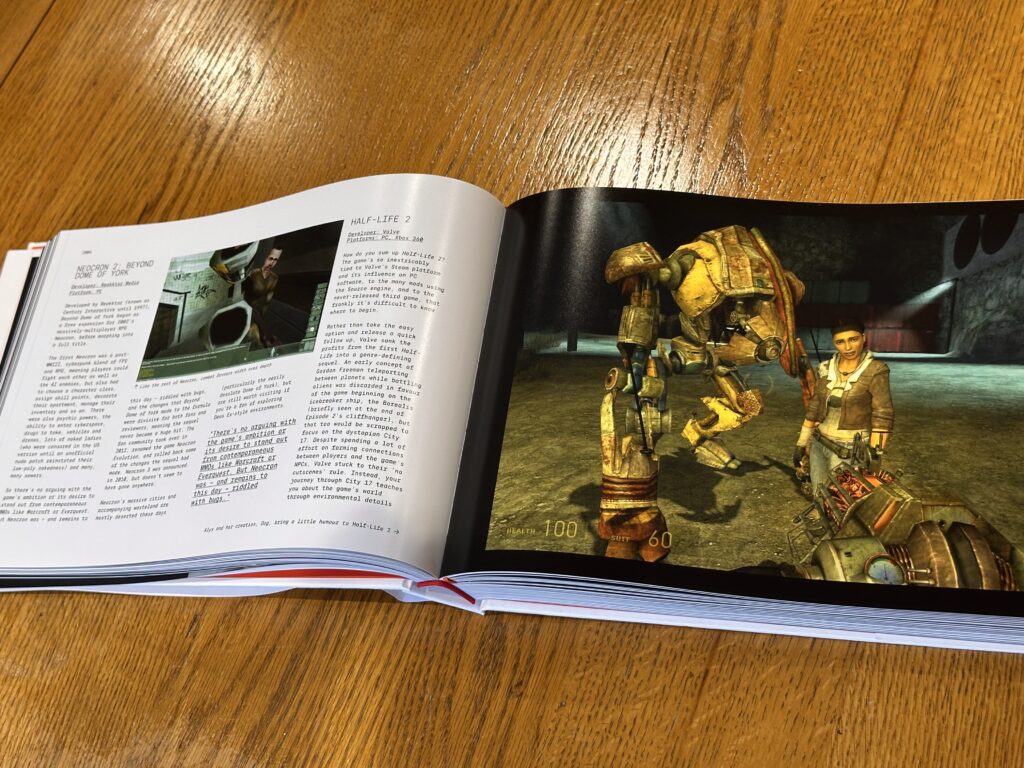
One thing that reinforces my idea of this being the FPS genre’s teenage years is the sheer number of sequels. Half-Life 2, Arma II, Halo 2 and Serious Sam 2 are just a few examples. In some cases, multiple entries in a series are grouped together under a single heading.
One section I particularly enjoyed covered the Resistance series. I was 18 when the PS3 launched and had saved money from my Summer job to buy one on release day. I absolutely loved Resistance: Fall of Man. If anyone reading this can remake it, you have one “no questions asked” favour from me. The book’s coverage of the series includes Resistance 2, Resistance 3 and the Vita-exclusive Burning Skies, making it a nice retrospective of a franchise that perhaps doesn’t get talked about enough these days.
While Hurt Me Plenty initially drew me in through games I loved, and a few that I very much didn’t (looking at you, Haze), I soon found myself fascinated by the games I had never heard of. One example was Robert D. Anderson & The Legacy of Cthulhu. Having read about it, I am honestly quite glad I never played it, but I still found its story fascinating.
One of the things I respect the most from Hurt Me Plenty was the amount of research that has gone into the writing. Some entries are naturally shorter because the games themselves left little impact on the industry. That’s fine. Not every game needs to be a masterpiece. Some are simply okay. And in Haze’s case, it existed, I guess.
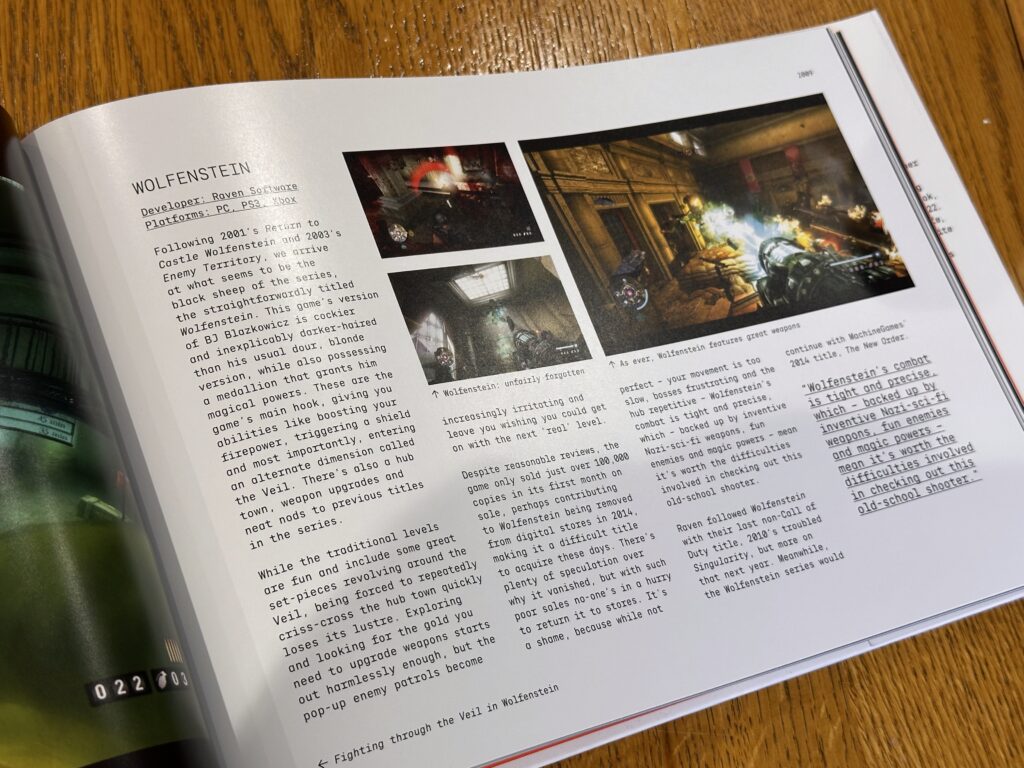
Other entries are far more substantial. Regardless of length, each one is engaging and informative. You can tell they were written by somebody with a genuine love and understanding of the subject matter. Stuart Maine deserves a lot of credit for the work that has gone into this book.
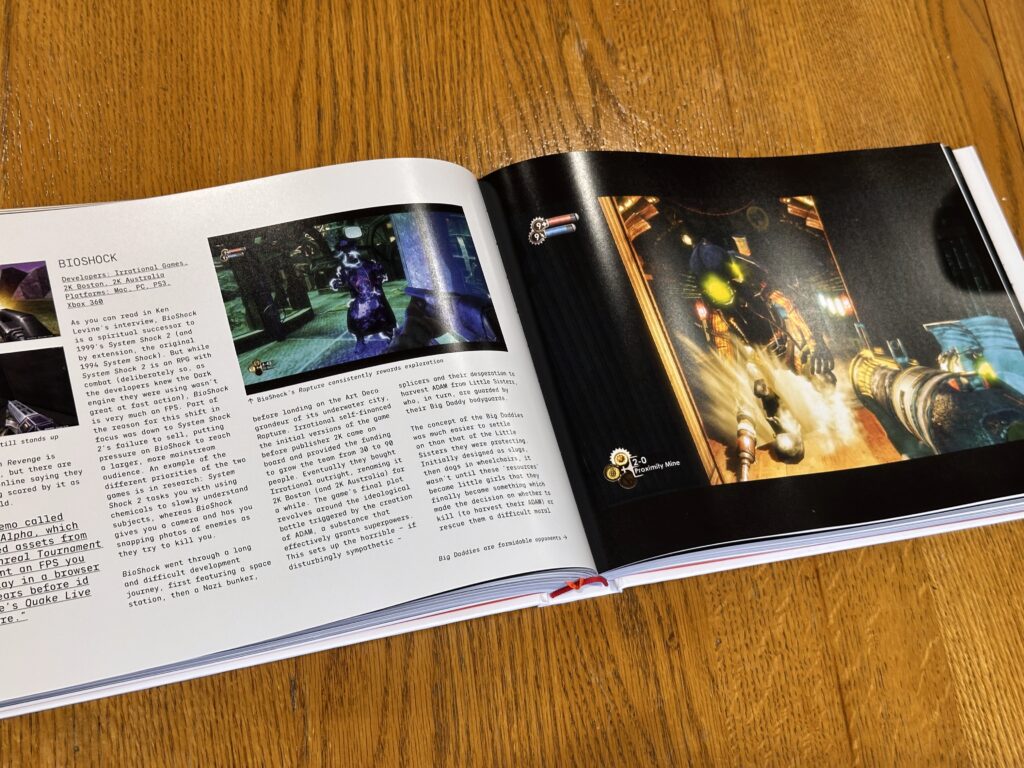
After reviewing Beyond Fear, I immediately turned to the BioShock section. It’s one of my favourite games and a useful benchmark for the era and I wanted to see how each book compared. The entry itself does a good job of covering the game, but what really stood out was the later interview with Ken Levine which gave me a good comparison. Reading that rekindled some of the excitement I felt when I first played BioShock all those years ago. Hurt Me Plenty is more of a reference book compared to Beyond Fear, but it’s still able to give some nice more personal insights than I thought it would.
It also highlighted one of the challenges Hurt Me Plenty faces. With nearly 220 games to cover, the book has to balance breadth with depth. Most entries provide a strong overview rather than an exhaustive deep dive. In that sense, it’s a little like Wikipedia. It gives you enough information to understand why a game mattered and, if your interest is sparked, enough to encourage further reading. The developer interviews are where the book occasionally gets the opportunity to go much deeper.
At over 460 pages, Hurt Me Plenty is an impressive physical object. The quality is first class throughout. The layouts are excellent, the screenshots look fantastic and the paper stock gives the images a real punch.
My one criticism is actually related to the book’s size. It is heavy. Really heavy. As I was reading it, I often struggled to find a comfortable position and rarely read for more than thirty minutes at a time before needing a break. Thankfully, Hurt Me Plenty is the sort of book that encourages dipping in and out rather than reading from cover to cover in a single sitting. In many ways, it feels as much like a display piece as it does a reference book.
What impressed me most was how effectively Hurt Me Plenty captures a genre in transition. By 2010, first-person shooters had become one of gaming’s dominant forces, but the road to that point was anything but straightforward. Alongside genre-defining classics such as Fallout 3 and Borderlands are ambitious failures, forgotten experiments and projects that never quite lived up to their promise. Their inclusion helps paint a far richer and more honest picture of the era.
If you’re a fan of first-person shooters or gaming history, Hurt Me Plenty deserves a place on your shelf. Just make sure the shelf is sturdy enough first. It’s informative, entertaining and packed with enough detail to keep you engaged for hours. More importantly, it serves as a jumping-off point for further exploration, introducing readers to games you may have missed or long since forgotten.
So load up, reload, hit quick save and get out there whilst screaming Hurt Me Plenty!!!!!!.
You can find Hurt Me Plenty over on the Bitmap Books website.
