

Games are more than entertainment in a variety of ways, and charity-led endeavours like the Devcats games show that real-world action and education can be tied directly into gaming to great effect. Enter Find Your Words, a free game made by two dads of non-verbal children, in which you can explore a summer camp as a non-verbal child.
Making friends and completing tasks is all performed through a Communication Binder, which is a flipbook of symbols a non-verbal child can show others to help speak to them. Some symbols are concepts like “Happy” or “Sad” while others are specific locations like “Campsite” or “Cliff”. Beyond teaching us that these binders exist, the game doesn’t really commit to education, information or any meaning at all – instead focusing on being a simple, short experience that might help make other younger children feel more accustomed to non-verbal peers.
An interesting dialogue system which truly evokes empathy
It’d be easy to have all the kids be the epitome of considerate and understanding, and of course the game does make sure there’s nothing offensive present, but I was quietly impressed with how one of the children was actually allowed to be written with a bit of ignorance. Not ignorance from neglect or through any fault, just a valid representation that not every kid will grasp a Communication Binder right away, and will be harder to get messages through because they communicate in a very different way themselves.
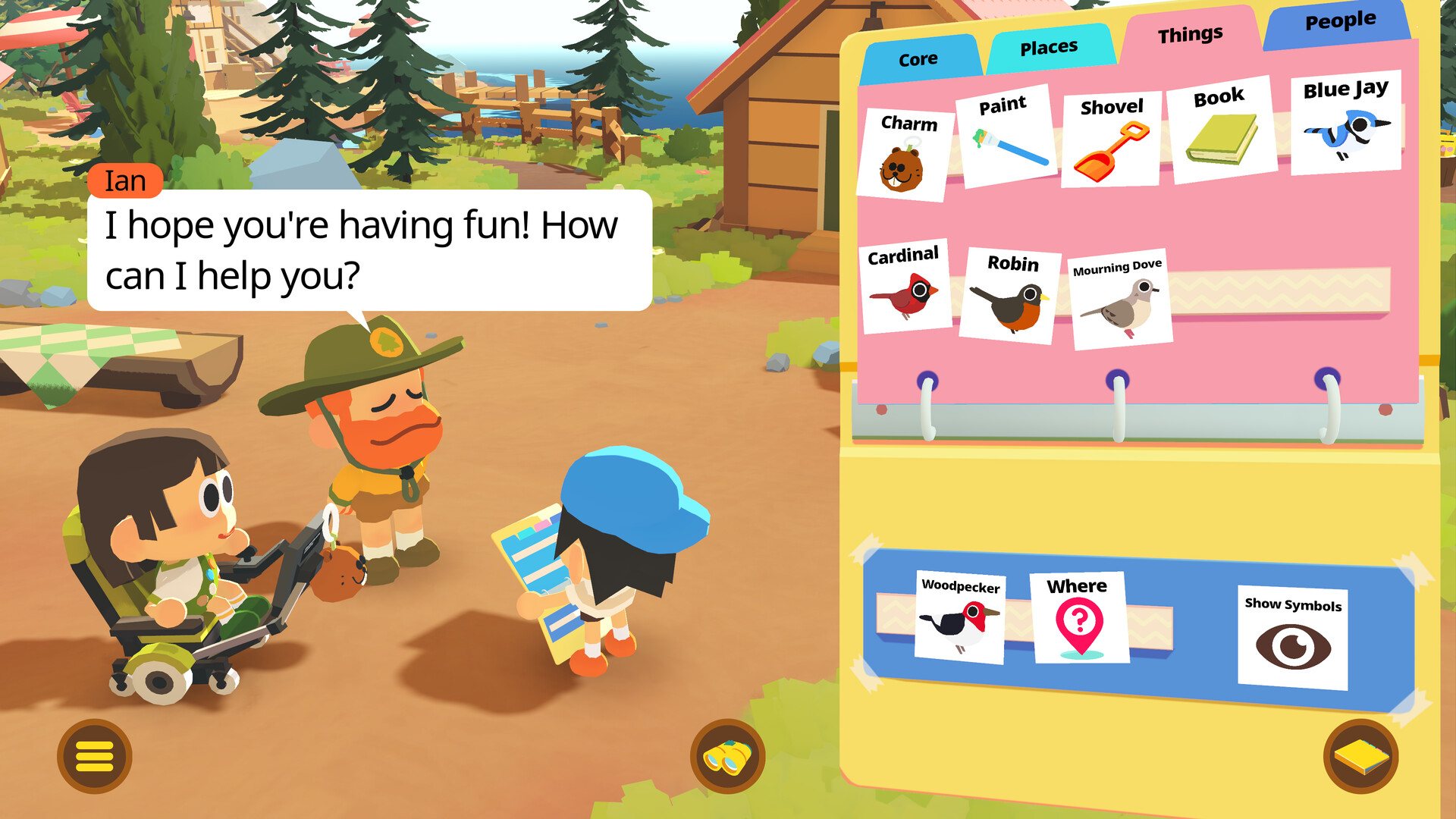
Being limited to two symbols at a time from the binder also helped me feel a true level of empathy, as I’m someone who generally communicates in much the same way I write. I can’t imagine not using a complex sentence almost every time I speak, and Find Your Words helped me to understand just how different non-verbal life must be.
The fact that even in a videogame – a closed system of predetermined conversations – it can still be hard to really express your exact intent just goes to show how much more daunting that task must be in real life, a place with no controlled variables…
Cute graphics and a good intent can’t stop the game feeling morose
I get the impression the game wanted me to connect with the easy-going, friend-making vibe. You can explore, play games and generally be a kid at camp. However, being constantly cut-off, despite not being able to speak, actually made me connect in a different way: Sheer empathy for how hard it is to be misconstrued and ignored.
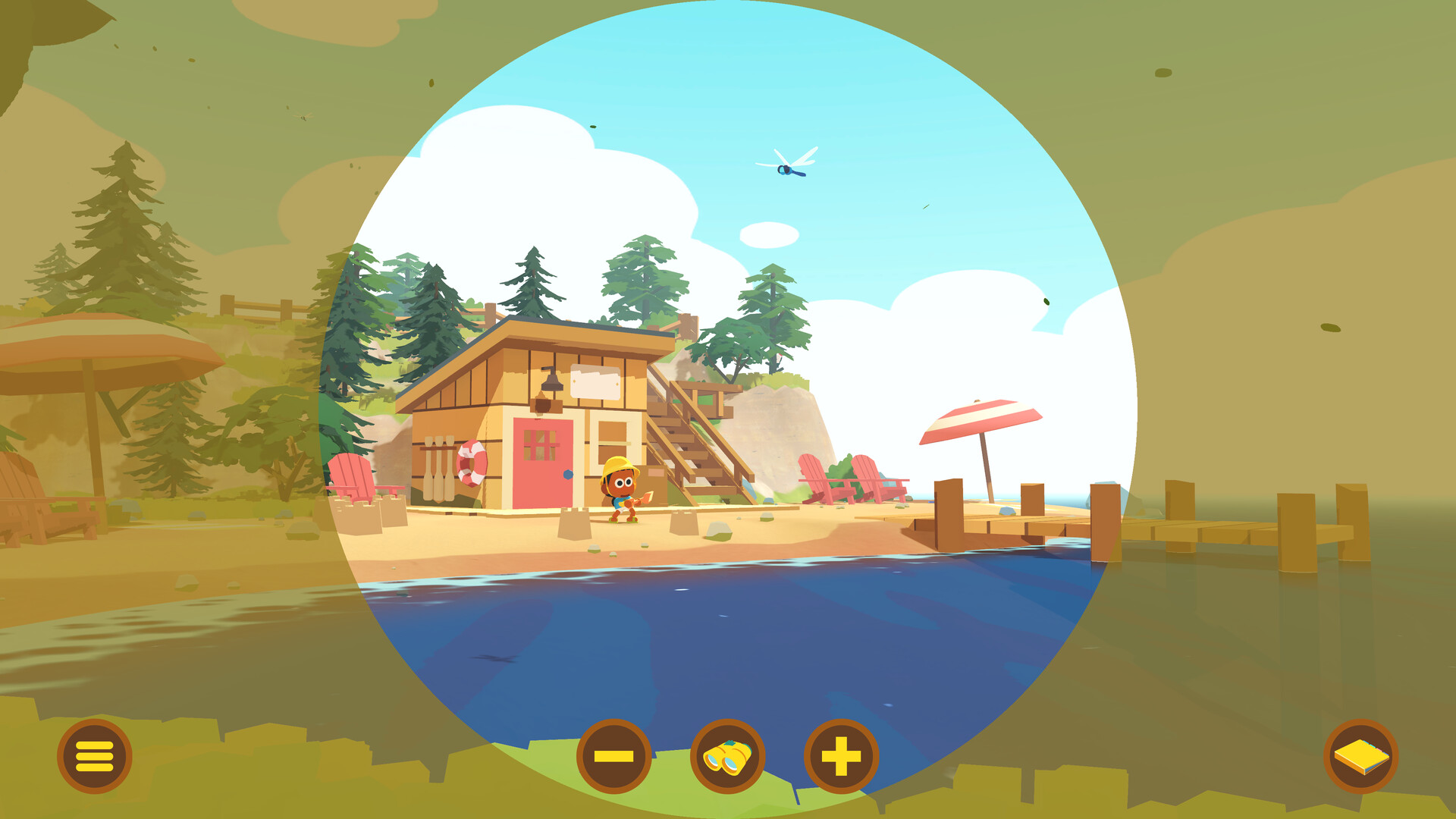
For example, finishing day one and being able to report to mum using all your newfound words should be the big exciting and emotional cap-off to the day. I was ready to cry, ready to see her react excitedly to all the birds I saw, dances I learnt and comment on the charms I found. I could taste the relief a parent must feel when they see their child communicate such complex ideas for the very first time.
Unfortunately these picture cards just don’t have specific interactions.
I’m afraid “There’s so many fun things at the camp!” just doesn’t cut it as a response from a mum to a kid showing her a picture of a bird. A mum who left the kid with his first-time using a Communication Binder and should be ecstatic over him being able to say “I saw a Blue Jay up the Tower”. I felt ignored, I felt unheard. In a game about finding words there needs to be a minimal level of reactivity in the dialogue for you to feel that you did, in fact, find any…
And then that’s credits, in just under an hour of playtime.
I’m all for short experiences, Catto’s Post Office is bite-sized and still makes grown men cry. Find Your Words is perfectly valid as it is, but knowing the backstory and having played the full game I just wish there was a little bit more emotion and connection.
A game with real-world influence that doesn’t celebrate it
The devs spoke at a gaming event last year saying that they’re both dads who each have non-speaking children. There’s no real pictures of the two founders in game, no little blurb of explanation, no information boards to read with pop-ups of real-world facts or trivia. After games like Squeakross featured the real pet rodents of supporters, Devcats games openly showed their connections to charity and real-world kitten fostering, and even roguelike Hive Blight having real trivia about bugs you control – I expected Find Your Words to take inspiration from those ideas.
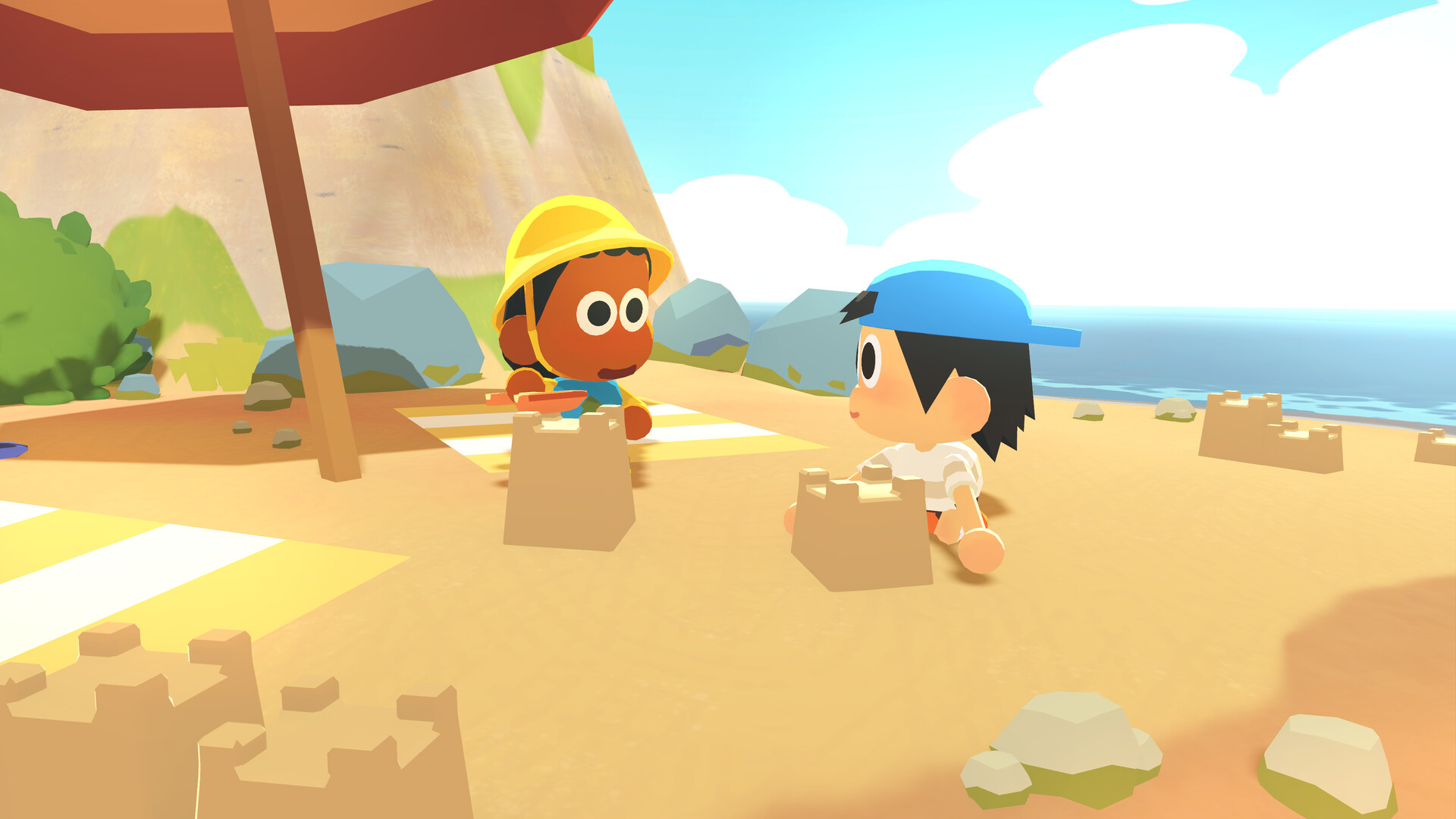
I left the game not knowing anything more about non-verbal children than when I started, and while it was an enjoyable enough hour the game simply isn’t deep enough to stand apart from its roots. I’m not sure if the devs wanted to distance the game from reality because reality is harsher, or for privacy, but the lack of any information or even being given the context that this was a game made by two dads to non-verbal kids is certainly a confusing decision.
I understand the experience is free, but I can’t help feeling the goal for a piece of art like this must be more than simply “it functions”. I wanted to be inspired, informed, got-through-to. Instead I left feeling empathetic but not meaningfully moved or called to action.
A brave first step that could have been a stride
Find Your Words is a great way to introduce younger kids to the concept of someone non-verbal and stands out as the only game that directly utilises AAC (Augmented and Alternative Communication) for player communication. While it has its flaws, and could have done more with its time in the sun to educate and inform, the experience is still a good first step in the industry so that a more deeply designed experience could follow on.
Find Your Words is available for free on Steam
