

There are a lot of Survivors games out there. There’s good ones, wacky ones, unfinished ones, great ones, broken ones, uninspired ones…and ones about potatoes. What makes Hordes of Hunger the most disappointing of them all is that it isn’t pure, unadulterated garbage. I wish it was. Instead it commits the far worse crime of almost being good but never…quite…reaching it.
Like many other Survivors games this is a genre-mashup. In this case it’s Survivors and 3rd person action slasher. Usually these sorts of mashups will cherry pick the best mechanics to port across from each inspiration, melding into something like R.I.P or the upcoming Vampire Crawlers. Hordes of Hunger takes the bold decision to, instead, stick everything in a blender and turn it up to 11 (with the lid off).
The absolutely criminal thing about the ordeal is I wish I could say “It’s a plain Survivors game in a dull action setting” but I genuinely love some ideas here, and really want someone to pick up Hordes of Hunger and make it the game it could be. To really give you the authentic experience I need to explain just how cool some of these systems are, and then tell you just how badly it plays.
Meta-progression that’s more than a mindless slog
In terms of survivors-like meta-progression you have your standard array of unlimited respec stat bonuses. Move speed, health, stagger damage etc. However, you also have permanent NPCs you can rescue in missions to have at the camp, as well as a crafting system for weapons. Weapons can roll with different stats, and most importantly you can get entirely new armaments this way. These come with a slew of new attacks and “playstyles”, to use a term that gives the game far too much credit.
The main differences are the crafting and NPC systems, but how you interact with those unlocks is also a little bit of a hook. Unlike most Survivors games, you actually have to treat Hordes of Hunger a little like an Extraction game (As if there weren’t enough ingredients in this salad tosser of a game already). Crafting schematics, new perks and skills, and a portion of your currency are only actually rewarded if you successfully finish a full run or choose to extract after an objective.
This does add a risk/reward angle to runs that I haven’t seen focused on in the genre, and I did find myself extracting at checkpoint 1 multiple times to make sure I banked the rare sword parts I found. Hordes of Hunger does a good job at filling in for the simple Survivors-like concept, and just like I said in my R.I.P review, giving the player meaningful choices to make is paramount.
Interesting story-related objectives in a usually sparse genre
The little innovations and interests go beyond the meta-progression, too. The objectives that you have to opt-in to carry on a run are varied, with some requiring you to almost ignore enemies in favour of chasing pickups while some require you to stay in one spot on the map for an extended period.
The most interesting, though, are the NPC and story objectives. In the second area, a gothic cathedral with a blood-red sky, you find a wandering priest. He immediately starts yelling about the end times and sprinting around with a drum “warning” the village of the danger. Of course, they’re all already dead and his drumming attracts hordes of (hungry) demons, so you have to utilise dodges, quicksteps and special attack lunges to chase him down and put a stop to his racket.
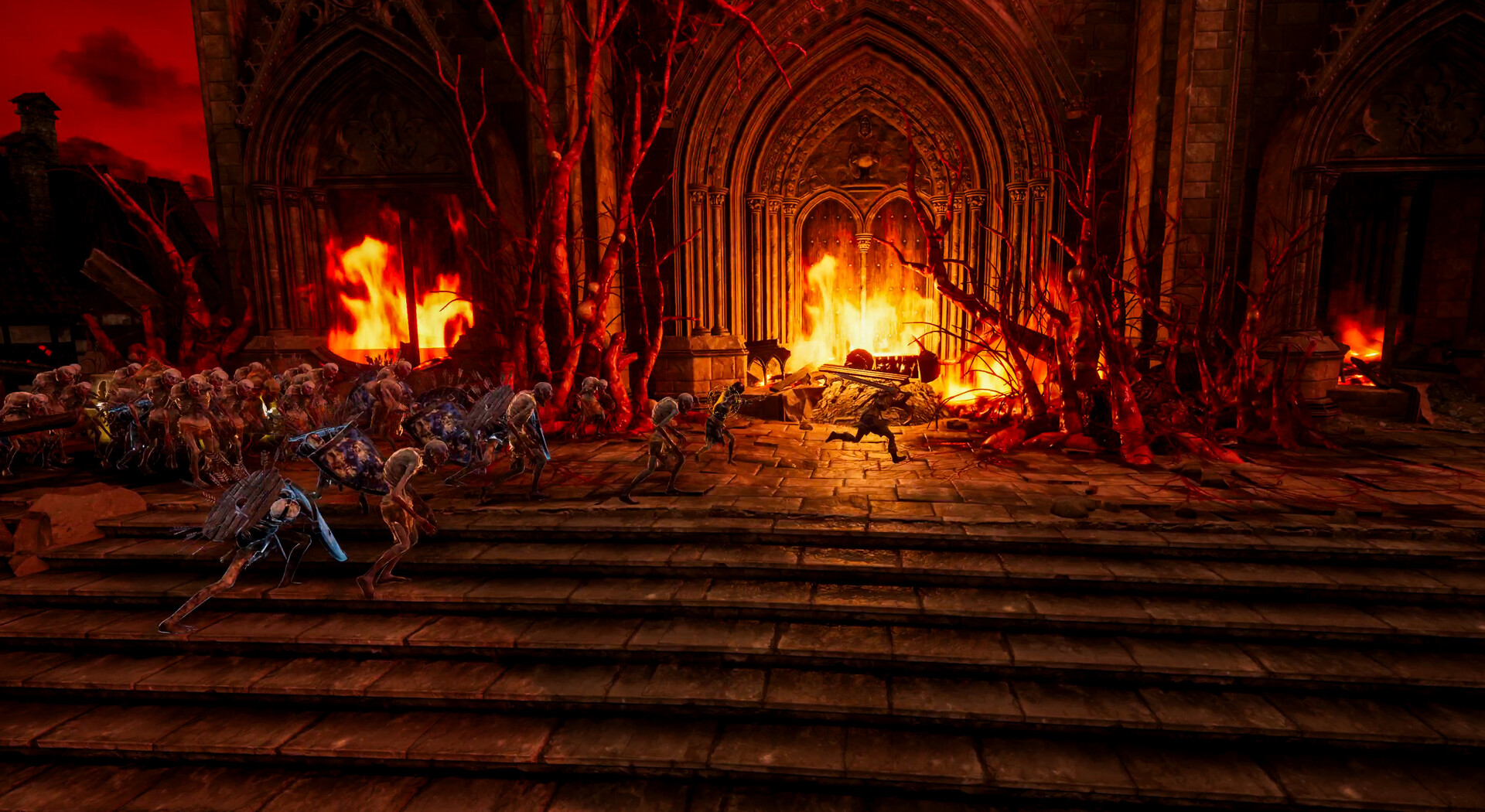
It’s not groundbreaking, but it’s interesting enough of an objective compared to “Slay x Things in 30 Seconds” that is your typical Survivors-like fayre. It’s all these little developments that make Hordes of Hunger a game that looks fantastic on paper, and that’s what kept making me try to enjoy my time with it…
Alas, to no avail.
Stretched like butter over too much bread
For all its conceptual successes, Hordes of Hunger simply stretches itself too thin. You have all the progression aspects, extraction, survivors-like level ups and exp farming, but also in-depth objectives and combat that doesn’t have space to shine in a horde. There’s not just light attacks, which charge your heavy attack, but also special attacks which charge even slower. Then there’s jump attacks, and no less than 3 different defensive moves.
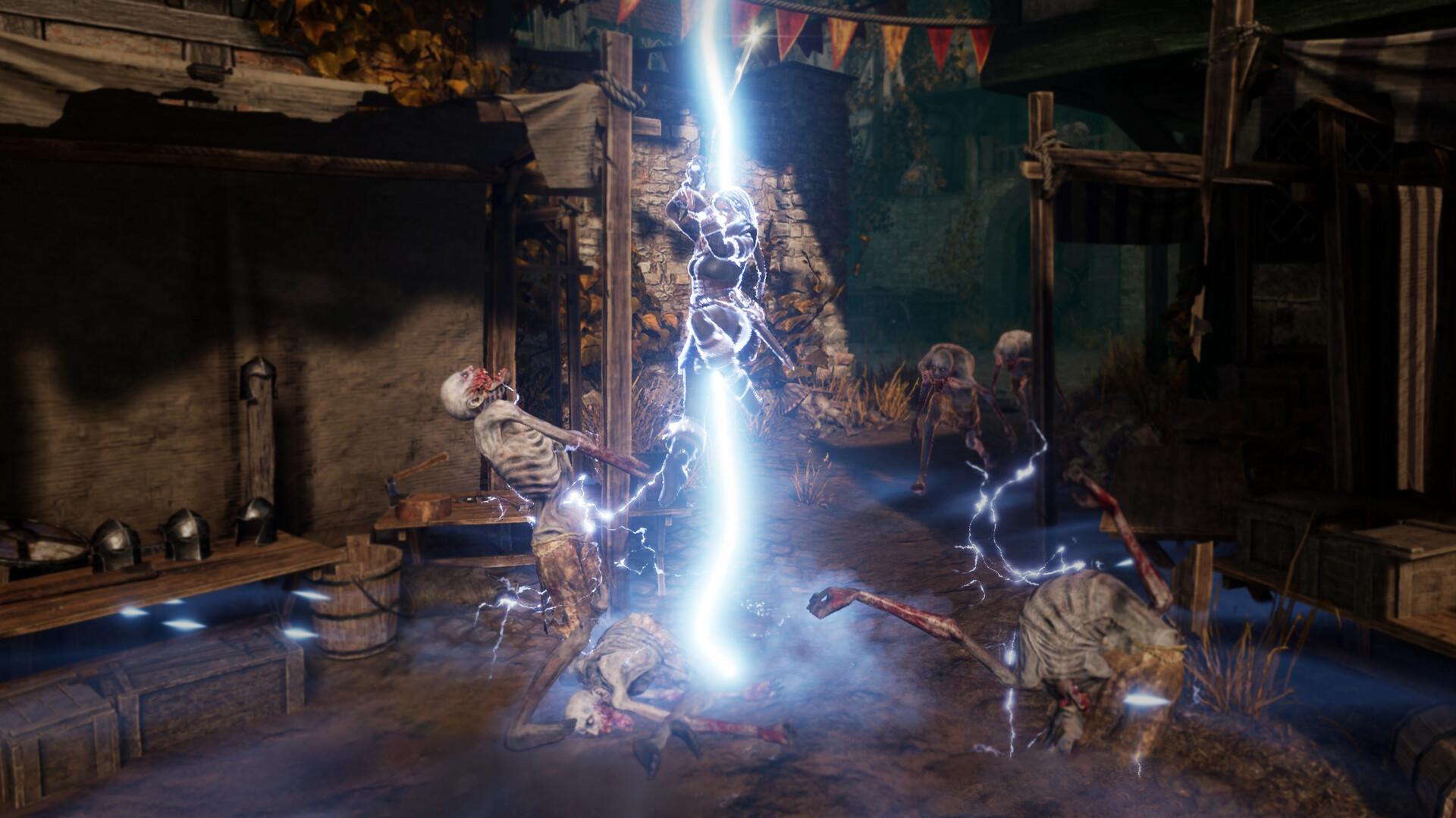
You can dodge, moving a considerable distance. You can side-step, moving far less but triggering a counter-hit as you go (and some mid-run upgrades proc on side-steps). You can parry, which doesn’t move you at all but stuns and damages all nearby enemies. Side-step and parry are bound to the same button, by the way, it’s just that parry will happen if you aren’t moving at the time.
In a horde of 4+ yellow attack warnings a second, does any of that “depth” actually add anything to the game? The answer, as you may have guessed, is no. In fact, you’re more likely to bee-line for the upgrade that stuns enemies when you side-step and then never do anything else for defence again. All these systems and what is meant to be the meat of the combat system is frankly wasted on this game being committed to the Survivors genre. Genre mashups can work, I’ve loved many of them, but the developers need to know what to keep and what to trim.
I’d love this combat in a different game, and I’d love this game with different combat
Any skills that don’t affect your attacks with your weapon are basically cosmetic, with no ability I tried except 1 actually overpowering my standard sword with all the buffs. The ability in question made enemies I kill turn around and run away, before exploding for my attack damage in an area. Not only is that hilarious, but getting free AoE just for slicing guys up with my sword really spiked my power and crowd-control.
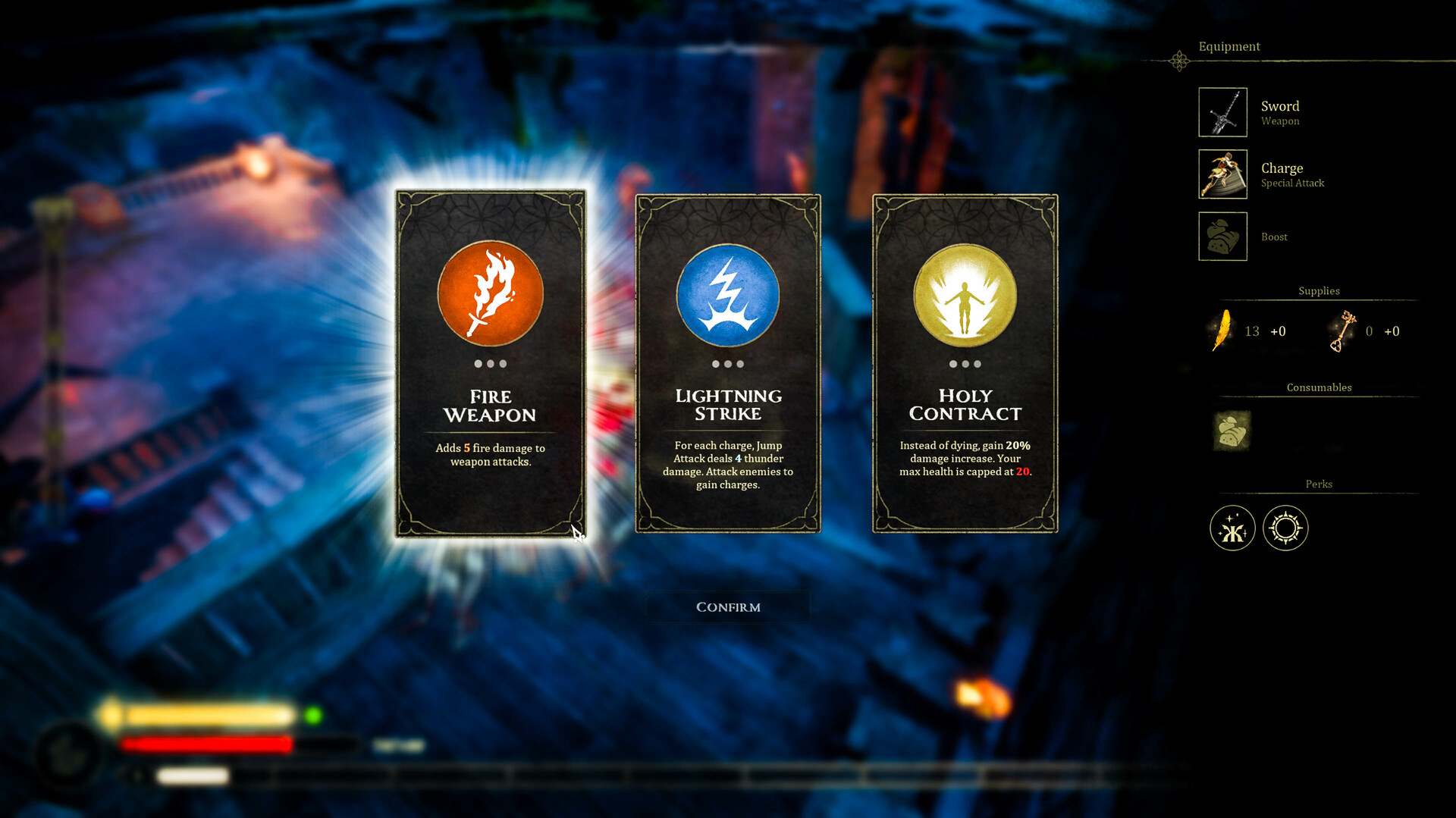
But, there I go sounding invested again, sounding like this is a discussion of a game not a train wreck. See, even if you have all those upgrades you likely won’t be having enough fun to really make this all worthwhile. Enemies are incoherent, have no attack limitations (Making parries ineffective) and some later archetypes are absolutely barbaric.
There’s one enemy, and honestly this tells you all you need to know about Hordes of Hunger, that will attach a beam to you that makes all your attacks deal 1 damage. That’s it, that’s what that enemy does. They’re ranged, they can fly backwards behind hordes without collision, and they make you deal 1 damage per hit. I understand target prioritisation is important in these games, I actually praised R.I.P for its fantastic intuitive target prioritisation. This, though, is too blunt. They took the notion of “annoying enemy the player really wants dead” and just threw it in the blender with everything else. Farewell balance. Goodbye fun. Au revoir power fantasy. Auf Wiedersehen materials I needed to extract.
In the moments where I had small, diverse groups of enemies and could mix in parries, side-steps, heavy attacks and specials I really felt things click. It made Hordes of Hunger feel like it’d be so much more successful as a standard Roguelike arena slasher – going room-to-room clearing specific, tough groups rather than being plonked in a huge horde of the buggers and slapped with “Survivors” in the description. Then again, the Survivors elements of extracting and progressing with npc quests are solid too, but exist above a combat system that is clearly not built for it.
Brilliant ideas from two different genres needs stronger glue to stick the landing
There we have it: Hordes of Hunger is a great action slasher, and an interesting Survivors-like. The problem is that it is both of those things independently. There’s no coherency, no consistent game experience. It’s all diced, minced and stuffed in pastry by two chefs trying to make two different things. It’s a chicken pot pie with a carrot cake lid.
Hordes of Hunger is available on Steam
